





Rule of thumb

|
[edit] Introduction
Rule of thumb is an English phrase that has been in common use since the 17th century. It describes a method of doing things which, although not scientifically verified, is broadly correct although it may not be strictly accurate or reliable in all applications, even though it may have proved successful on past occasions.
It may be that a rule of thumb is eventually proved in science to be correct, although it may still be referred to as a ‘rule of thumb’ – see below.
[edit] Use in construction
Builders of the past would have used rules of thumb in construction. Gothic cathedrals eventually would soar in height as master masons learned through experience to understand certain relationships e.g, the height of a tower in relation to its base and wall thickness; the depth of foundations according to soil conditions, or the diameter and spacing of piers to support the masonry above.
Advancement would typically be through making mistakes - frequently catastrophic - and learning from them. A classic example is the collapse (in 1237) of the main tower at Lincoln Cathedral, and the collapse (1210) of the south-west tower of Chichester cathedral followed in 1635 by the collapse of its north-west tower.
Rules of thumb are still used today by construction professionals as they can give a basis from which a more detailed design may be delivered.
Examples of rules of thumb are:
- The Evans rule, which arose out of a Royal Academy of Engineering paper by Evans et al: the 1:5:200 ratio. This states that if initial building construction costs are ‘one’, over the years ‘five’ will be the operating and maintenance costs, while ‘200’ will be business operating costs.
- Health and Safety Executive (HSE): in assessing noise risks for large, dynamic sites …’as a general rule of thumb, the noise level is probably 80db or more if the noise is intrusive but normal conversation is possible between people 2m apart – comparable to a busy street, a typical vacuum cleaner or a crowded restaurant'.
- BSRIA has a publication called 'Rules of thumb - guidelines for building services (5th Edition) (BG 9/2011)', providing a source of approximate engineering design, environmental performance and project cost-data for building services projects.
- The '45 degree rule' and the '50:50 rule' for determining rights to light.
[edit] Related articles on Designing Buildings Wiki
Featured articles
Check out some of the best features and news from Designing Buildings as well as key stories from around the web.
Construction Management, 8 July

NEETs crisis drives interest in trades, but apprenticeships barriers remain.
Passive fire protection webinar

MEP services penetration seals.

Where its at podcast (and video) - The role of the Architectural Technologist as an Expert Witness.
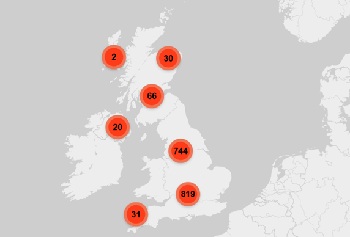
More than 200 remarkable buildings added to SAVE’s Buildings at Risk register.

Government scraps pre-application consultation for Nationally Significant Infrastructure Projects.
Historic England and infrastructure
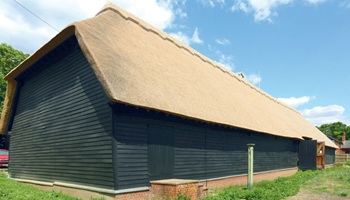
New projects offer opportunities for the historic environment and local communities.
Construction Management, 2 July

Construction deaths halve in two years.
Green Book changes to drive investment in all parts of UK.
Minimum energy efficiency standards (MEES)

CIAT briefing on response to consultations for privately rented non-domestic properties.
Connect, collaborate, shape the future

Registration now live for UK Construction Week Birmingham.

CIOB announces Saul Humphrey FCIOB as new President for 26/27 term.

A quick, simple, and zero-bills solution to prevent overheating.